Your book can introduce the work you want to be hired for. Your website has to show someone how to take you up on it.
An event organizer who likes your ideas needs to see what you bring to a room. A reader who wants your help needs to find the offer that fits. Sending both of them to a retailer link leaves the next decision to them.
These three nonfiction author website examples come from sites we designed for authors whose books support consulting, coaching and speaking. Each one makes the step after the book clear in a different way.
Tissa Richards gives readers routes into her leadership work
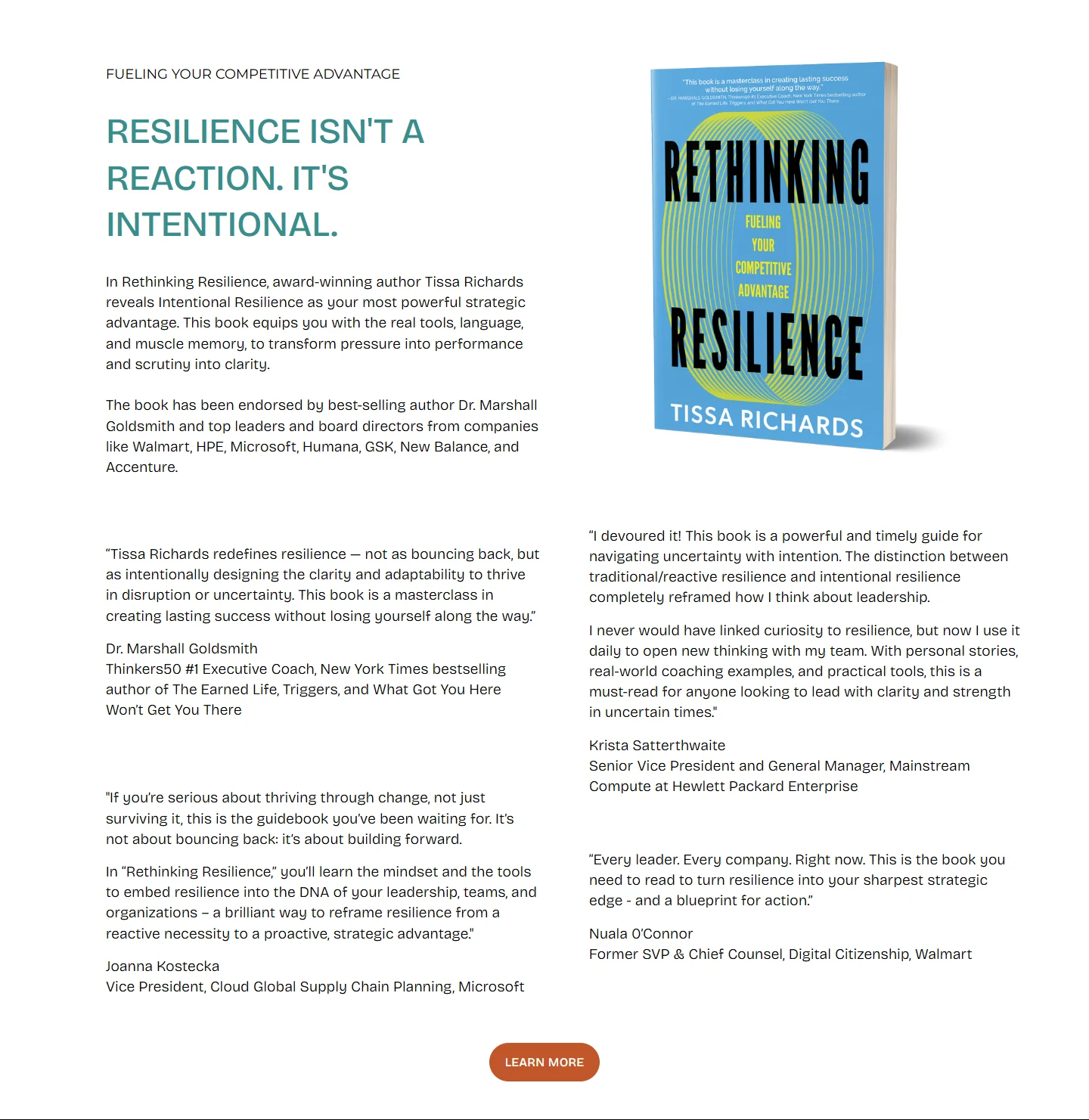
Tissa Richards is a tech founder, author and keynote speaker. Her book Rethinking Resilience explains Intentional Resilience, the approach behind her leadership teaching.
We gave the book a substantial section on her homepage, with its cover, the central idea and endorsements from leaders at Microsoft and HPE and a former Walmart executive. A visitor can understand what the book contributes before choosing where to go next.
Her speaking page gives event organizers stage photography, a reel, keynote topics and audience feedback. The advising page introduces The Unshakable Leader, My Board Blueprint and one-to-one work. Those separate routes let a reader explore working with her and let an organizer assess her for an event.
“She took my nebulous idea about how to describe what I do, and turned it into the most serious upgrade of my website I’ve ever had.”
Tissa Richards, author, keynote speaker and tech founder
The decision to borrow: organize your site around the different people who might hire you. A speaking buyer and someone looking for advice need different evidence, even when the same book brought them to you.
See Tissa’s website design and the pages behind it.
Sheevaun Thatcher connects her book to her consulting
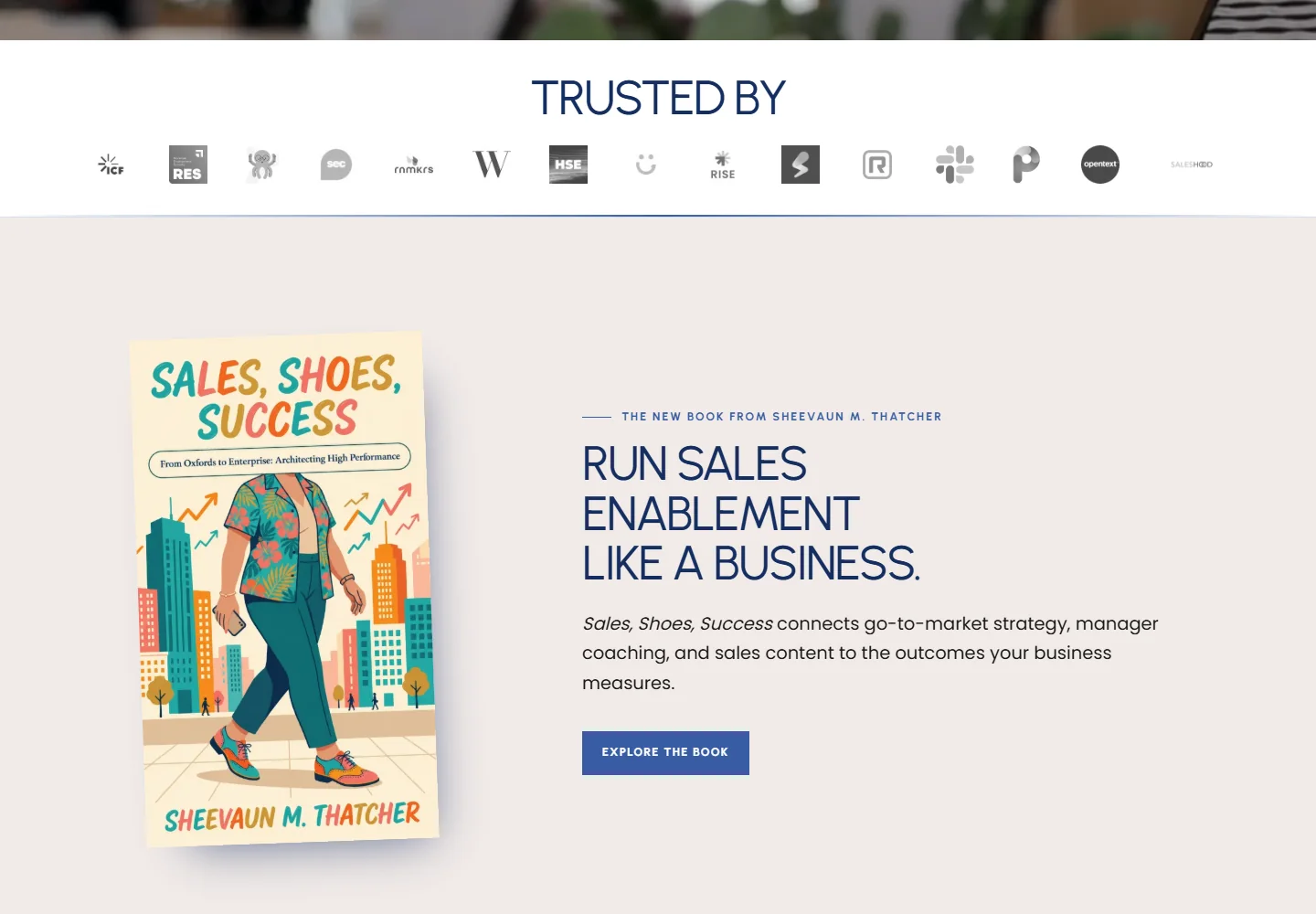
Sales, Shoes, Success puts Sheevaun Thatcher’s sales enablement experience into three frameworks a business can use. We designed her website before the book existed. When she came back to us to publish the book, we rebuilt the site so the book has a permanent place beside her consulting.
The book sits directly beneath the logos of the organizations that have trusted her, and a banner on every page announces the hardcover. Its dedicated Book page lays out ACTS, the INVEST Triangle and COACH, a ninety-day starting plan and all seven endorsements, with a direct path to Amazon.
The homepage also invites visitors to book a Rapid Strategy Diagnostic, which leads to her contact page. A sales leader who finishes the book and wants help applying it is one click from that conversation.
The decision to borrow: make the connection between your book’s subject and the problem you solve for clients explicit. Describe the first engagement well enough that a reader can recognize when they need it.
See how we brought Sheevaun’s book and consulting together.
Viveka von Rosen gives people a way to try her approach
Viveka von Rosen’s books and speaking career are part of the experience behind her coaching. On the Beyond the Dreamboard speaking page we designed, her books sit with her keynote topics, testimonials, a reel and previous engagements, so an organizer can evaluate the speaker.
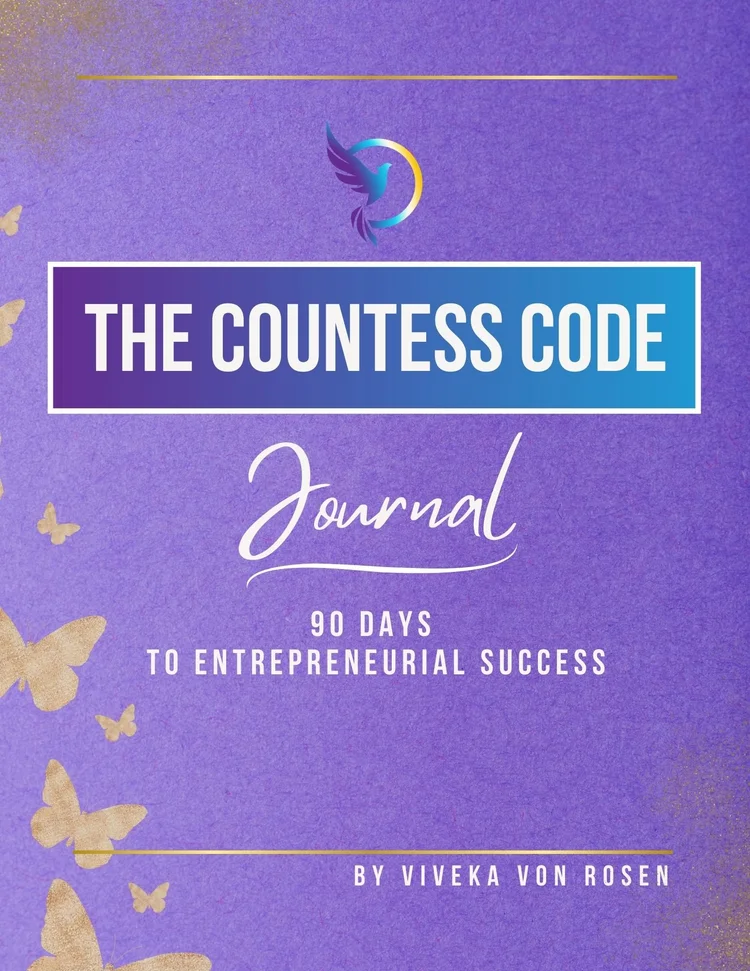
For someone still getting to know her work, we designed The Countess Code Journal. The fillable journal introduces her framework through daily reflection and 90-day planning. Its signup page invites readers to receive the journal along with updates about her live events, workshops and trainings.
The decision to borrow: give interested readers a useful first experience of your thinking. A resource connected to your method gives someone a reason to stay in touch while they consider working with you.
See the speaking page and journal in Viveka’s case study.
What these author website examples have in common
In all three, the book lives on the same site as the work it supports: Tissa’s speaking and advising, Sheevaun’s consulting, and Viveka’s coaching and speaking. Each site gives the book’s ideas a visible place, then gives every kind of visitor a next step.
Use these author website examples to plan your own site
Before you commission an author website, be able to answer these questions:
- What do you want to be hired for? Name the engagement your site should support, whether that’s a keynote, an advisory relationship or a program.
- What does that buyer need to see? An event organizer needs topics and footage of you speaking. A consulting prospect needs to understand the problem you solve and see evidence from relevant work.
- Where does the book help them decide? Put its ideas and attributed endorsements beside the offer they support. Keep a clear buying route for visitors who came for the book.
- What can an interested reader do today? Make the inquiry, application or resource easy to find, and explain what happens next.
Start there when choosing your pages. The book gives people access to your ideas; the website should help them see where those ideas could take their own work.
Questions about nonfiction author websites
What should a nonfiction author website include?
Start with the work you want to be hired for, then give each buyer what they need to decide. In the examples above, that meant a homepage section or dedicated page for the book with its ideas and endorsements, a speaking page with topics and footage, a route into advising or consulting, and a clear way to inquire, book a call or sign up for a resource.
Should my book have its own page?
Both approaches appear in these examples. Sheevaun Thatcher’s Book page lays out her three frameworks, a ninety-day starting plan and seven endorsements, with a direct path to Amazon. Tissa Richards’s book gets a full section on her homepage, next to the routes into her speaking and advising.
Should my author website be separate from my business website?
In all three examples, the book lives on the same site as the speaking, consulting or coaching it supports. A reader who wants more of the author’s thinking can find the way to hire them without leaving the site.
How long does it take to build an author website with Sway Rise Creative?
The Authority Platform, which includes your positioning, brand, imagery, a seven-page custom website and a lead tool, launches 30 days after kickoff.
Our website design for authors connects your book to the business around it. If you’re ready to build that connection, see the Authority Platform’s scope and current investment.