
Most businesses don’t have a marketing problem. They have a positioning problem, and marketing is where it gets exposed. You’re doing good work, you’re putting yourself out there, and you’re still stuck chasing clients instead of being chosen by them.
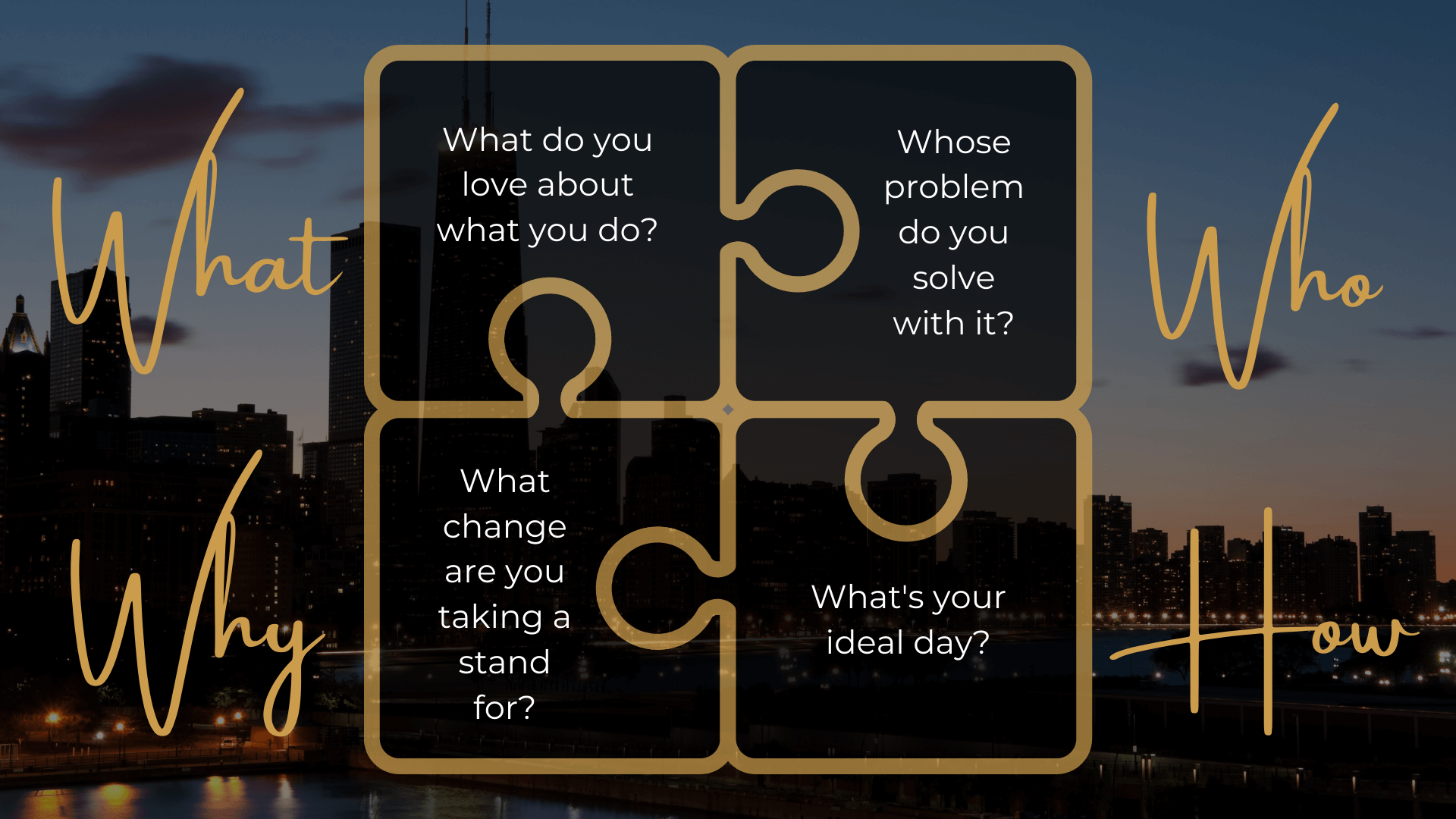
The root cause is almost never your marketing. It’s that you haven’t gotten specific about your own strengths, or about exactly who needs them most.
The Difference Between Branding and Brand Identity
Let’s redefine branding, because it isn’t just your logo or your color scheme.
What is branding? At its core, branding is a combination of two things: how well people understand your promise to them, and how much they trust you to deliver on it.
That’s what people expect the moment they decide to work with you or buy from you, and it shows up in everything from your visual identity to how you conduct business.
Marketing is branding in action.
Without a clear brand underneath it, effective marketing is nearly impossible, no matter how much of it you do.
That is why the Authority Platform begins with Position, Point of View, and Proof before those decisions become a custom website and lead-generation system.
Brand Positioning Step 1: Define Your Value Proposition (The WHAT)
The foundation of a strong brand is understanding what makes you uniquely awesome. This is your core value proposition, the WHAT: the work you do exceptionally well, consistently, and without forcing it. To uncover it, evaluate these four things:
- Passion. What do I love about my work?
- Energy. What gives me energy instead of draining it?
- Referrals. What do friends and colleagues consistently come to me for?
- Social proof. What themes keep showing up in client testimonials, whether I asked for them or not?
This isn’t just about feeling good. It’s about laying the groundwork for a sustainable business. When you build your brand around what you truly excel at and enjoy, you naturally differentiate yourself from competitors, because you’re describing something true about you instead of something you invented to sound impressive.
Brand Positioning Step 2: Target Audience Segmentation (The WHO)
Once you’re clear on your WHAT, it’s time to focus on who needs it most. The right clients are the ones with the problem you solve, the urgency to solve it, and the budget to act.
Understanding these people deeply, their wants, their needs, and the challenges they’re already fighting, lets you communicate your value in a way that actually resonates.
That’s the entire difference between language that blends into the background and copy that stops the scroll because it sounds like you were listening in on their exact problem.
Features vs. Benefits in Value-Based Copywriting
Most businesses talk about what they do. Strong brands explain why it matters. A feature is what your service includes. A benefit is what changes for your client because of it.
| Feature (what it includes) | Benefit (what changes for the client) |
|---|---|
| Example: a 10-step tech stack audit | Complete peace of mind that your data is secure |
| Example: 24/7 client portal access | No more waiting on email replies to see project updates |
For each feature of what you offer, find the corresponding benefit to the person receiving it. That shift in perspective can dramatically improve how you communicate your value.
Creating a Core Brand Promise Statement
With your WHAT, your WHO, and your benefits in place, you can write a brand promise. A standard template looks like this:
“We help [your ideal client] achieve [the primary benefit] through [your unique approach], so they can [the bigger goal].”
That sentence becomes the core of your messaging, guiding everything from your elevator pitch to your website copy, so you’re not reinventing your positioning every time you sit down to write.
This process isn’t about perfection. It’s about progress, and it rewards honest self-reflection over polish. Work through it and you’ll likely uncover things about your own business that surprise you.
When you get specific about your strengths and who they’re built for, your marketing gets simpler, sharper, and far easier to trust. The right buyer can see why your work belongs at the level you are asking them to consider.